


Spanish slow-roasted pork belly
Updated: Jun 6
Spanish slow-roasted pork belly is widely known as the tapas bar dish 'torreznos con mojo dulce' , a sweet spicy sauce. But it also has other guises such here, served with a fresh, green salsa verde, skin-on roasted potatoes, Rioja-style beans and grilled padrón peppers. It's a slow dish, but gets on with it in the background while you get on with other things. A great weekend family meal or alternative to a traditional Sunday roast.
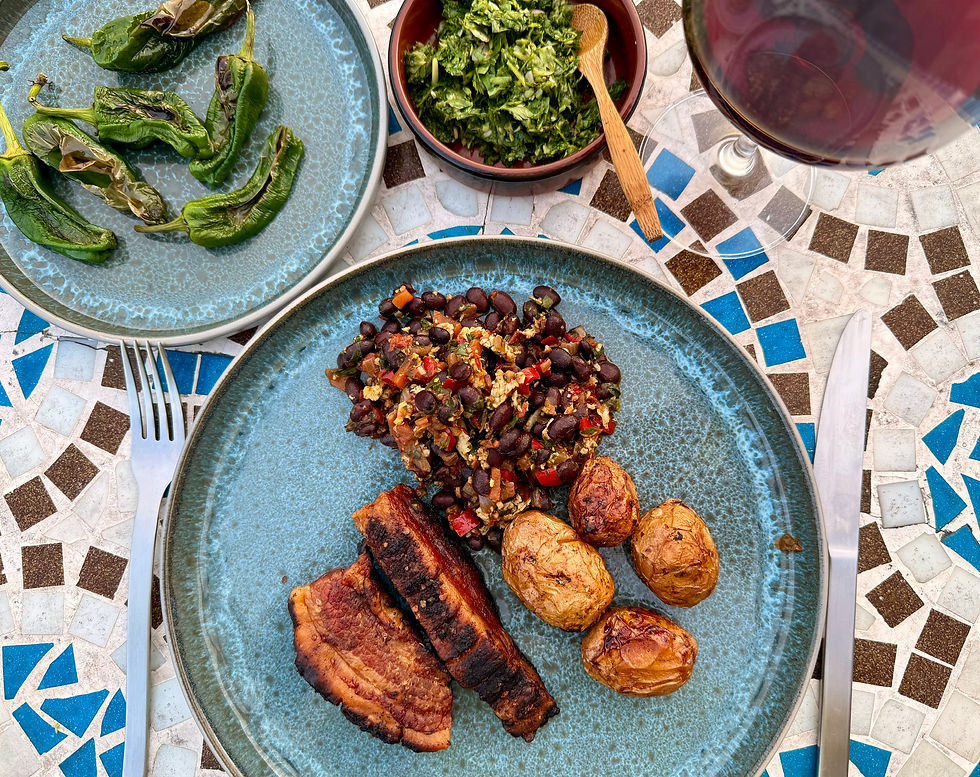
Belly of the beast
It's been so many years since I first encountered this Spanish dish that I really couldn't say exactly where I first came across the recipe. It's a reasonably straightforward, slow-cooked dish that has simply been "around" for much of my life.
As an adult, I've mostly experienced it as the popular tapas dish torreznos con mojo dulce, slices of slow-roasted pork belly—tapas eateries often then fry it to complete the crisping of the outer layer of fat— served with a rich, spicy sauce, the mojo dulce. It can be found on the menu across many parts of Spain and far further afield though I remember having a particularly good version of it in the Triana district of Seville, a laidback neighbourhood over the river from the overpriced tourist traps around the Giralda.
However, over the years, invited to dinner by Spanish friends, I discovered that it's also often roasted as a larger piece of pork belly, together with potatoes and served up with crisp crackling, essentially a Spanish equivalent of a British pork Sunday roast.
I love mojo dulce, but I prefer to serve it in colder months given that I find it rather rich. Similarly, I almost always make this dish using thick slices of pork belly rather than a large cut of meat. This way, if you have leftovers—I inevitably do—it's easy to reheat or to shred for a variety of other Spanish and Mexican dishes—tacos, anyone?
So, here I'm serving it with a salsa verde. I find these simple, uncooked green flavours a perfect complement in warmer weather.
Pick a side
Since torreznos con mojo dulce is a self-contained tapa, in a tapas bar, you decide what you would like to go with it from the menu, while, served as a home-cooked meal, it's frequently served with potatoes roasted alongside the pork belly and is also often served with some kind of bean dish, as I am doing here.
I'm serving a particular version of these popular bean dishes, one with black beans, a version that I've found more commonly in Mexico. In Spain, it's often the famed pinto beans that are used—which have become oddly hard to find in UK supermarkets. Reflecting a long and complex food history, the Spanish pinto beans are usually cooked with parsley, while coriander is favoured in the Mexican black bean version of this dish usually designated "Rioja-style" after the region in which the pinto bean version is said to have originated. Though essentially the same dish cooked in the same way, quite expectedly, spicier chillies such as jalapeños are often added to Mexican versions. I'm not doing that here for a very specific reason.
I'm not making the black beans overly spicy because I don't want to overshadow the flavour of the grilled padrón peppers I'm serving as a little treat on the side. I couldn't believe my luck in getting my hands on these, a seasonal delicacy from Northwestern Spain that will always be my first choice with torreznos in a tapas bar if they have both on the menu.

Here, during a record-breakingly hot May, I'm serving it with a fresh salsa verde with a bit of bite from both citrus and garlic rather than the mojo dulce. Conveniently, the salsa verde is a lot quicker and easier to make.
This dish is great with any number of sides ranging from steamed veggies to salads or simply with good bread and a decent olive tapenade. Your choice.
Take note:
This recipe serves 4 people, but please note that the images show me cooking the pork and potatoes in roughly half the quantities of the recipe. However, I'm cooking the black beans in the same portions as a side dish for 4 people mainly because it makes a great second lactovegetarian meal, hot or cold, and can be stored in the fridge for a couple of days.
Similarly, if you have any of the pork belly left over; shredded, with a bit of (grilled) cheese, salsa verde and salad, it makes the most fantastic bocadillo or sandwich the next day.

3 top tips to get this recipe right: |
|
|
|
Shopping list
for the Spanish slow-roasted pork belly
Approx. 750g pork belly; cut into thick slices; approx. 2 slices per diner
2 or 3 cloves of garlic; whole, peeled and bruised
Approx. 500g young potatoes; scrubbed, skin on
1 tspn pimentón (smoked sweet paprika); the mild kind
150ml dry white wine
100ml beer
1tspn dried oregano
Coarsely ground rock salt (for seasoning the meat)
Salt and black pepper, to taste

for the black beans Rioja-style
1 tin or bottle (400g) of black beans (or pinto beans)
2 tbspns virgin olive oil
1 carrot; peeled and diced
½ cup roughly puréed very ripe fresh tomatoes
1 red sweet pepper (or red bell pepper); chopped
1 small onion (red or brown); diced
2 tspns garlic ; chopped
½ tspn pimentón (smoked sweet paprika); the mild kind
500ml vegetable stock
2 bay leaves (dried or fresh)
A few saffron stamens (or saffron powder)
A clutch of fresh coriander (or flat leaf parsley); chopped
1 egg
Salt and pepper, to taste
for the salsa verde
4 handfuls of fresh flat leaf parsley; washed and drained
4 handfuls of fresh spinach; washed and drained
2 handfuls of rocket (arugula); washed and drained
1 handful of flaked almonds
3 cloves of garlic; peeled
3 shallots; peeled
3 large spring onions
Extra virgin olive oil; approx. 1 tbspn
White wine vinegar (or sherry vinegar); approx. 2 tbspns
the zest and juice of half a fresh lemon
salt and pepper, to taste
Cooking Method
the Spanish slow-roasted pork belly
In a suitable oven-proof roasting dish, arrange your pork belly slices with the fatty, outer side facing up. Season sparingly with pimentón and a little more liberally with the coarsely ground rock salt. Rub into the meat (the salt on all sides, the pimentón only on the fatty side , then slit the outer fat horizontally in numerous places. This helps it crisp up during cooking. I do this after seasoning because it makes it easier to spread the pimentón more evenly. If your pork belly is still cold from storing in the fridge, allow it to return to ambient temperature before doing this
Bruise the peeled cloves of garlic with the side of a knife and place into the dish whole. Add approx. half of the wine. Because pork belly is naturally fatty, you do not need to add any oil
Cook in the middle of a pre-heated oven at 160°C for 60mins, adding the remainder of the wine after about 30mins, pouring gently over the top of the pork belly
After an hour, if most of the wine has cooked off—wait a little longer if it has not—gently pour in the beer and return to the oven for a further 30mins; checking occasionally that the liquid has not cooked off too quickly. If it has, simply add little dashes of tepid water
Remove from the oven. By now you should have a very thin layer of relatively clear juices in the base of the dish. If it is more than a few millimetres deep, spoon off a little of it (keep to one side in case you need to use it later). Add your potatoes, turning in the pan so that they're coated all over. Sprinkle the dried oregano over the potatoes only. Return to the oven and cook for about another hour. Halfway through, check on them. If needed, lay some of your pork belly slices on their side to even out the crisping of all outer surfaces
Depending on your oven and the quantities of pork belly and potatoes you're roasting, at this temperature it will take between 2.5 and 3 hours for everything to have cooked optimally. The potatoes will not crisp but appear "wrinkly", more akin to baked potatoes. However, as you will taste upon serving, they will have absorbed wonderfully complex flavours from the juices in the pan
Once optimally cooked—the pork meat will be flaky, the outer fat layer crisp—remove from the oven and rest before plating. However, if you really like blackened, crispy pork belly—it's entirely a matter of personal taste—briefly place the pork belly slices, fat side up, under a hot grill before resting and plating — in this case, along with the padrón peppers
Plate or take to table in serving dishes
the black beans Rioja-style
In a large frying pan with a lid, heat the olive oil on a medium heat. When the oil is hot, add the onion, sweet pepper and carrot, stirring almost constantly. Sauté until they soften slightly; about 5 or 6mins
Add the garlic and stir in, followed almost immediately by the pimentón. As soon as the aromas release—about another minute or so—add the tomatoes and all of their juices and stir in. You want to cook this mixture down until the tomatoes are cooked, but you might have to add dabs of the stock if the liquid in the pan dries out
Once the tomatoes are cooked, add the black beans and stir in, mixing with the other ingredients until the pan is almost dry. Then, pour in the remaining stock and add the saffron. Increase the heat slightly until the contents boil. Then reduce the heat and simmer; initially covered and later uncovered, to reduce the liquid. At a gentle simmer this will probably take about 12 to 15mins
While the liquid in the pan is reducing, in another small pan, heat a small amount of olive oil and fry an egg, turning it so that the yolk is fully cooked. Remove from the heat and allow to cool momentarily. While still warm, transfer to a mortar or suitable bowl. Add the chopped coriander leaves and grind together with a pestle
When the liquid has almost entirely reduced, add the ground egg and coriander to the beans and quickly stir in. Then, season with salt and pepper and remove from the heat.
Cover to keep warm before plating or taking to the table in a serving dish
the salsa verde
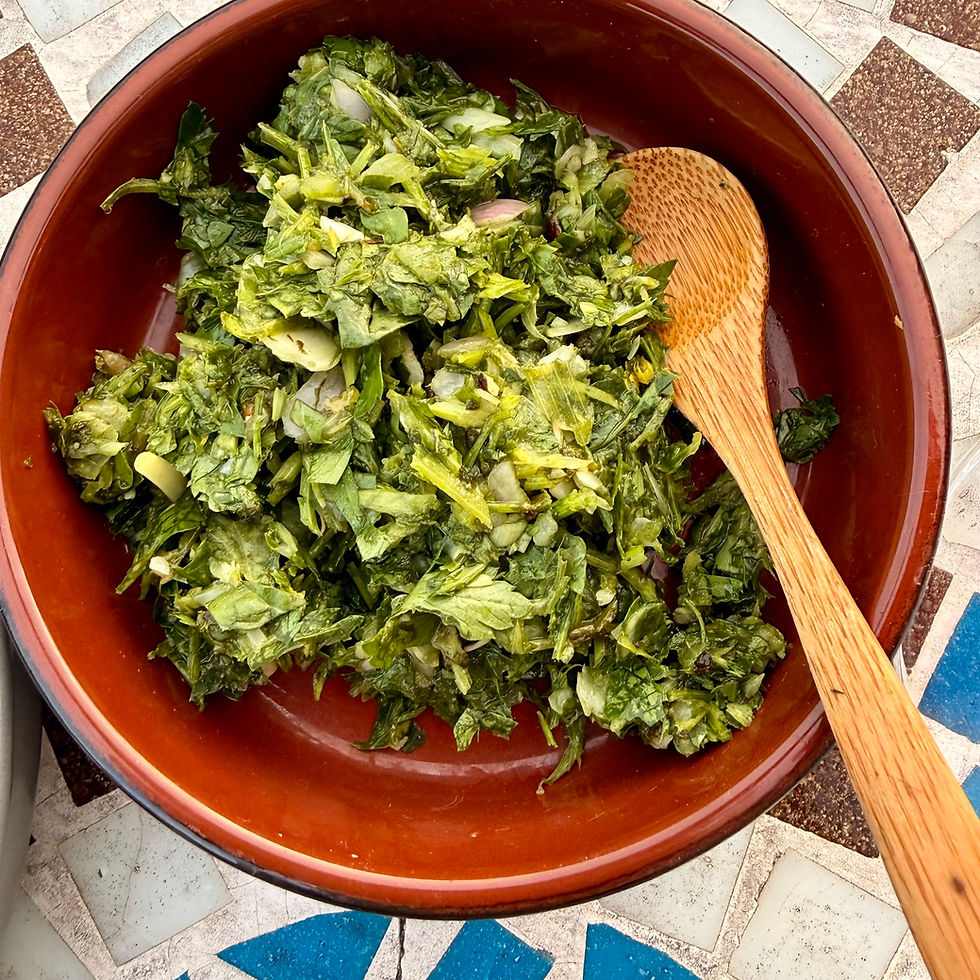
Wilt half of the spinach in a microwave (approx 20 to 30 secs). While it cools, add the garlic, almonds and shallots to a mini chopper and chop. Squeeze all the liquid out of the wilted spinach, then add to the mini chopper, chopping in. Decant to a mixing bowl. Dress with a little olive oil, stirring in
To the same mini chopper (without cleaning it) add the remaining raw spinach, the flat leaf parsley, the rocket, and the spring onions (including some of the green stems). Chop until moderately fine. Decant to the mixing bowl and fold into the other ingredients, adding the lemon zest, which should be finely grated
Add the vinegar, remaining olive oil and lemon juice, a bit at a time, stirring in, until you reach optimal consistency and your preferred balance of flavours
Season with salt and pepper and take to table. You can prepare the salsa ahead and store in the fridge allowing it to return to ambient temperature before taking to table
Alternatives
This is one of those dishes with no obvious pescatarian or vegan options in terms of substitutes for the pork belly.
However, the Rioja-style beans, grilled padrón peppers and salsa verde, served with some lightly toasted rustic bread make an excellent lactovegetarian meal. It's my go-to choice when making a second meal with the leftovers. And, I make a vegan version of this beans dish crushing flaked almonds together with the chopped coriander or parsley. It's definitely has a different overall flavour, but is delicious one nonetheless. When making it as a vegan or lactovegetarian I work to the rough calculation that the quantities in the recipe above will serve 2 diners as a main course and scale up from there.
Pairings
While they are plenty of food-'n-wine enthusiasts who love to trot out the truism that white wines can work very well with pork, I vehemently think that when you combine pork belly with pimentón and cook it in this manner, you're looking at reds.
It's notable that most of the Spanish reds I really like with this dish come from Ribera del Duero. Unfortunately because many are highly rated, especially by affluent German or Scandinavian visitors and ex-pats, they don't start from a low buy-in point. My two best recommendations for quality-for-value are Aalto Aalto 2023 (but even the 2018 vintage is not massively more expensive) and Bodegas Vilano Vilano 57 2021, which kicks off at half the price, but is regarded just as highly.
Similarly, this dish works really well with numerous Argentinian Malbecs. Don't expect them to be the cheap-'n-cheerful alternative to Spanish wines in the way that they were up until not that long ago. These days Uco Valley Malbecs have an established reputation that makes them overall more expensive than comparatively rated Spanish wines. My tip on bang-for-buck is Riglos Gran Malbec 2021.
However, much as I love this dish, I don't cook it very often and, when I do, it usually because I have pork belly leftover bought for some other dish such as Cantonese-style pork belly or, as in this case, a barbecue. So, more often than not, I haven't planned ahead and have to make do with what I find on neighbourhood supermarket shelves. Of wines widely available in such locations, my advice is to look for a Rioja Tempranillo, an unoaked Rioja Joven or an Argentinian red grown at high altitudes. Basically, you want something that is bold enough to stand up to the flavours, but not so excessively woody/oaked that it cancels out the most interesting aspects of this dish.
A little unconventional but something that I think works really well with this dish when its hot or enjoyed al fresco are good traditional Andalusian sangrias. No, not the horrors of the British 1970s "sangria" of cheap red wine chucked together with a carton of orange juice. In fact they don't have any orange juice in them at all. Chopped fruits, including oranges, maybe, but soda water not fruit juice. The one I think works marvellously well here is the version with sherry and peaches and citrus (rather than tropical fruits or berries).
There are numerous beers that work well with this dish, of which those crisp Spanish or Mexican lagers are the best known and most widely available. My tip however is Alhambra Reserva 1925 one of Spain's so-called "toasted" beers. This distinctive lager has a caramel, nutty thing going on that works really well with this dish. It not only works so well as a drink with the pork, but it's my preferred beer to use in the roasting too.
For those who don't drink alcohol, try a booze-free sangria substituting the sherry with a dash of orange bitters.


Comments