


Cape Malay seafood curry
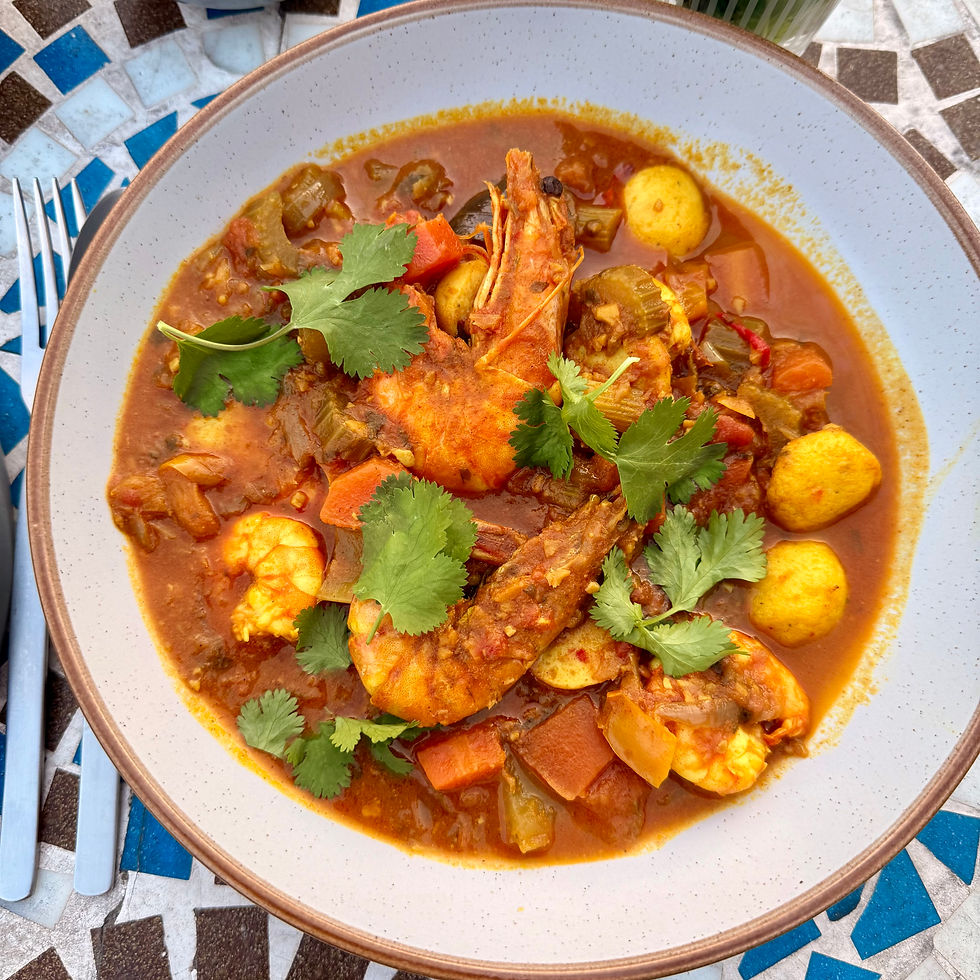
This Cape Malay seafood curry—technically it's fish and seafood—is a mild curry that's easy to make. It's less well-known than the famous lamb curries from the region, perhaps ironic given that it is more in keeping with the history of fishing at the Cape and today's healthier eating habits. It's relatively low in fat and brimming with vegetables too.

Fish-facing
This Cape Malay seafood curry is a mild curry—any additional heat you want, you add with hot achars or sambals at table—making the version I was taught is popular with kids and those who don't do well with very spicy food.
Don't confuse it with the better known fiery seafood curries from South Africa's Eastern Seaboard of Indian origin. It's another recipe taught to me by the intrepid Violet who spent some her childhood in Cape Town's District Six before her family moved to the UK.
It's a lesser known Cape Malay dish, overshadowed by the famous lamb dishes. I imagine that there are probably other reasons too. I think one reason is people don't seek out Cape Malay seafood is because of the misconception that seafood is not halal for the Cape Malay who are muslims. This is not true: the vast majority of Cape Malay who are observant of Islam are Sunni muslims who consider seafood and fish halal. And, of course, while Cape Malay muslim culture is one of the things most noticeable to visitors to Cape Town, 85 to 90% of people who identified as "Coloured" in the most recent census and other surveys state that they are Christian.
But, there are also more practical reasons. For example, it's hard to re-create the make-do-'n-mend ethos from which this curry springs in a restaurant; it's very much a "domestic" family dish. I have never seen it on a menu in a Cape Malay eatery in the Cape or elsewhere, though it has often been served to me by Violet and other friends of Cape Malay descent at home.
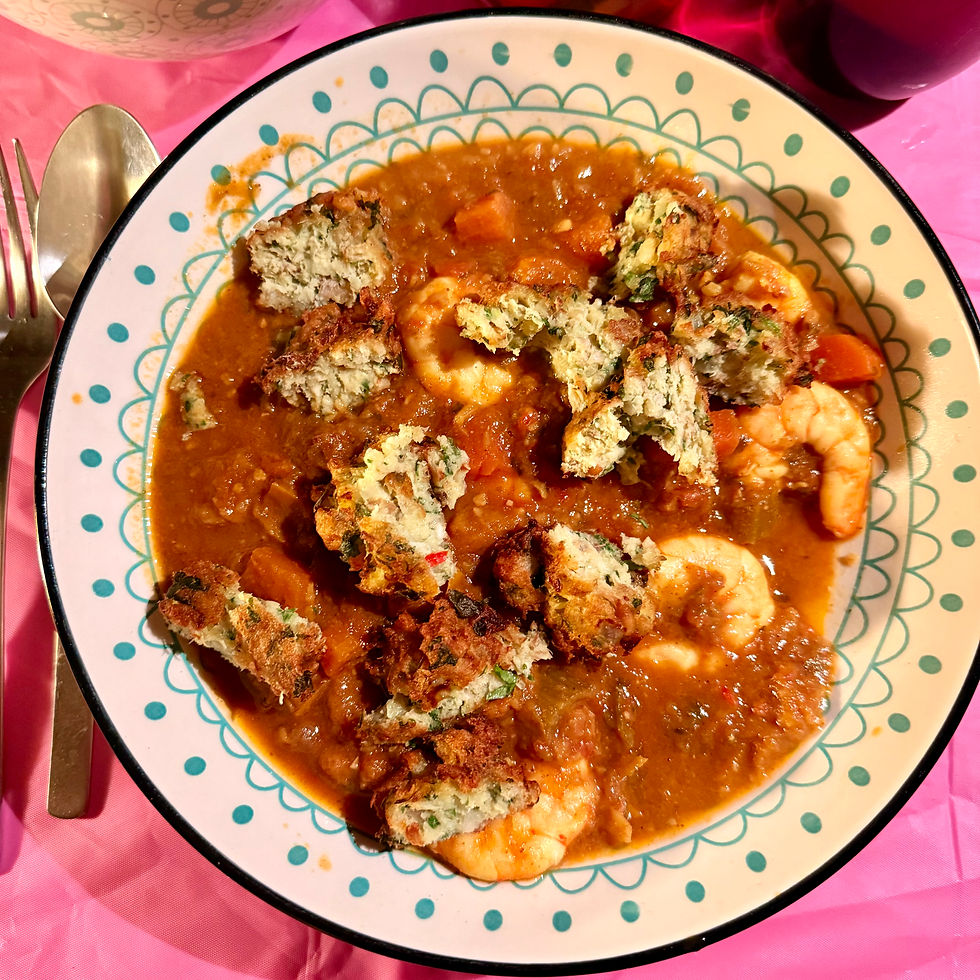
Furthermore, if you do the original version where you make the vissballetjies (little fish balls) from scratch, it's a bit more of a palaver, but, in my opinion, well worth the effort.
Recently, I have had a few friends moan at me that I should publish more "easy" recipes. So I am publishing the "quick hack" version I have developed over the years, though you can find the recipe for the authentic fish balls here. Frankly, I do think going the full nine yards makes the difference, if you can spare an extra 25 minutes.
A Cape Town story from the quayside
I'm not going to repeat the whole spiel on Cape Malay cuisine that you can already find published on this site in various places, such as here.
But, this dish has a unique history that Violet was keen to convey (probably because she recognised I was a food history geek), not least of all because she feared it was an example of Cape Malay intangible culture at risk of getting lost. She made me promise to cook the recipe and share it with others so that it would not. So, that's what I'm doing.
I spent time taking in Violet's first-person stories shared with me as well as undertaking other research. One lovely anecdote she told was that when she was a young child, it was nicknamed kaaikant kerrie (quayside curry). Another Cape Malay dish born of the pragmatic need to stretch resources to feed a family, canny Cape Malay homemakers would hang back at the quayside until the fishermen and rock harvesters had sold the best of their catches to the fishmongers and restaurant chefs. They would then haggle to get the best prices on what was left over—smaller mackerel or hake, prawns and mussels, or lobster or crab claws broken from the body in the nets and pots, and so on.
This had a longer history than one might assume. Long before the mid-19th century, Kalk Bay, an area originally settled by Simon van der Stel during the 17th-century, had a largely Indonesian population, one of the reasons that it was here that one of the first mosques was built in the Cape. Reflecting the Dutch colonial history in Indonesia, the arrival of Indonesians at the Cape, who would later evolve a unique Cape Malay culture, it also became a destination for other groups from South East Asian archipelagos. For example, in the early 19th-century, Kalk Bay also became home to a sizeable Filipino community.
The (predominantly) muslim Indonesian population and (mainly) Catholic Filipino communities were the first to establish small-boat fishing industries and whaling in Kalk Bay, later joined by whalers from Cornwall, Scandinavia and Portugal. This continued for almost two centuries until Cape Town's prosperous growth saw the Apartheid regime use a campaign of dirty tricks relying on questionable slum clearance laws and the Group Areas Act for a land grab. In 1967, Kalk Bay was declared "a white area" and the existing communities were forcibly relocated.
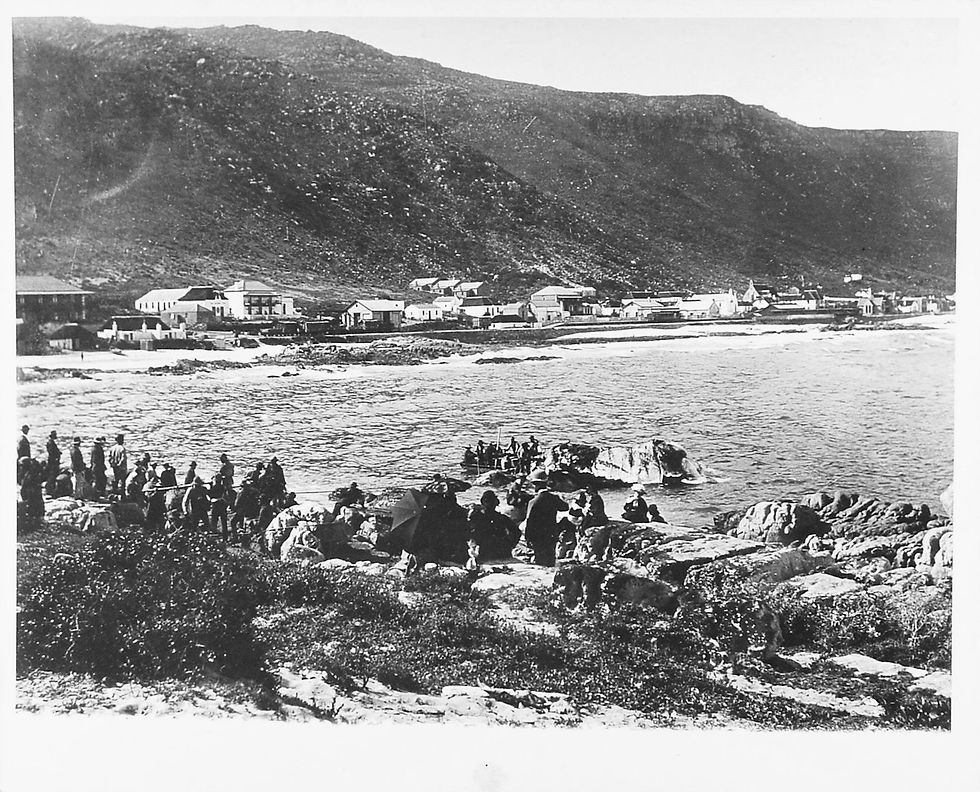
But, even that could not kill this dish. Women who had been taught to cook it by their mothers and grandmothers who had bought their fish in Kalk Bay, began to use other fish markets and docking quays to find the best deals on healthy fish and seafood that might not have made it onto the plates in restaurants in exclusive hotels, but remained delicious and nutritious home cooking.
A Dutch carrot
Like most Cape Malay dishes, this curry uses the quintet of spices associated with the cuisine—ground coriander, ground cumin, chilli powder, ground turmeric and garam masala—and other fresh ingredients also commonly found in Cape Malay dishes; garlic, fresh ginger, coriander, and chillies.
One of the notable things about Cape Malay cooking versus Indian Diasporan cooking from KwaZulu-Natal is that a lot of the vegetables used—carrots, green beans, celery, potatoes, etc.—seem notably "European" as opposed to "Asian". One theory is that this is because they are the vegetables that the Indonesian slaves, servants, clerks and labourers who arrived at the Cape with the Dutch colonists would have found in the kitchen gardens that they tended for the colonisers, adapting their own recipes to what was available until it became tradition. And, certainly, this is logical. But, I also think it is a little "isolationist", perhaps a product of the Apartheid era in which South Africans had reduced access to media or academic ideas from. the rest of the world.
One of the things I enjoy reading these days are the stories and social media posts of Capetonians who have visited Indonesia to learn more about their ancestry. One of the things that stands out is their delight in how similar their cuisines can be even after hundreds of years. And that, of course, is because long before the Dutch settled at the Cape, food travelled. Starting with the Portuguese who took chillies to Asia from South America, successive waves of Dutch, British, French and Spanish traders took—and brought back—all kinds of plants and foods from all over the world.
What was grown in those kitchen gardens at the Cape were not so much brought from Holland as "brought back"; vegetable varieties they had previously taken to Indonesia. One of the lesser known facts is that one of the reasons that the majority of the world's carrots are today orange is because of the Dutch. Before the 17th century most carrots in Europe were white or purple—the ones for which you now pay premium price as "heritage" varieties. The Dutch intentionally created the familiar orange carrot to celebrate the House of Orange, whose son, William the Sly, Prince of Nassau, led the Dutch rebellion against the Spanish that led to establishing the Dutch Republic.
For curry aficionados who primarily reference Indian or Thai curries, the beans, peas, kohlrabi, and even turnips of Cape Malay dishes may seem "European". The reality is that Asia embraced some of these vegetables not long after they embraced corn and chillies which were first taken to Asia in the 1500s. Today, we see food writers write about them as "quintessentially Asian"—and they have become exactly that—but they weren't always.
I openly acknowledge that I have evolved Violet's original recipe with its made-from-scratch fish balls for contemporary ease. But, while I am using specific vegetables here, I have eaten it cooked for me by Capetonians with many alternative veggies—sweetcorn, peas, spinach, cauliflower, sugar snap peas—and they were all great. Violet's guidance to me was, "Use whatever you have or what's in season, but stick to vegetables with a soft or sweet taste that won't cramp the style of the delicate fish."
Fish is a ball
I am listing a recipe here that uses readymade fish balls available fresh or frozen from Asian supermarkets in many parts of the world. The original Cape Malay recipe uses made-from-scratch fish balls. While this recipe is part of my "easy recipes" agenda, you can find the original fish ball (vis balletjies) recipe here, made with smoked mackerel (or snoek ,if you're lucky) and white fish such as hake or cod. These fish balls are not only used in this recipe but also served as delicious finger food at parties. Hence I have published the recipe separately as a dish in its own right.
Spuds 'n beans
I am serving a particular side dish here. This dish of patat en boontjies ("spuds 'n beans") is a Cape Malay dish traditionally served alongside yellow rice, sambals, and achars with this curry—and, indeed, other curries or even as a vegetarian dish on its own with chutneys or pickles. Very similar to the Punjabi dish saag aloo, this mild side dish of spices, potatoes and green beans is one of those side dishes that provides a filling adjunct characteristic of much Cape Malay cuisine.
Because it is filling, you are likely to have some left over in these quantities—some of my friends love it so much nothing is every left over—which is a good thing. It makes a great lunch the next day, quickly heated in the microwave and it makes a fantastic version of bubble-and-squeak with a Cape Malay twist. I have also used leftovers to make fantastic spiced chicken and vegetable soups.
This version serves 3 to 4 people, depending on your side dishes and condiments.
3 top tips to get this recipe right: |
|
|
|
Shopping list
for the Cape Malay seafood curry
Approx. 150g fish balls (fresh or frozen and defrosted), sliced. Alternatively make your own (see here)
Approx. 150g raw king prawns (or the equivalent weight in crab meat, shelled mussels, prawns or crayfish—take into account the weight of the shells if cooking in the shell)
2 onions, (red or brown); sliced
1 x 400g tin chopped tomatoes (or chopped fresh equivalent)
1 large fresh bell pepper (red or yellow); roughly diced
2 sticks of celery; cut into fairly large pieces
1 or 2 red bird's eye chillies; deseeded and chopped
2 carrots; peeled and cut into irregular "cubes"
3 tbspns sunflower oil
3 green cardamom pods; bruised
3 whole cloves
1 tspn yellow mustard seeds
4 curry leaves (dried or fresh)
2 dried bay leaves
1 star anise
2 tspns mild curry powder (e.g. Madras style)
2 tspns ground cumin
2 tspns ground coriander
1 tspn garam masala
1 tspn turmeric powder
1 tspn mild Kashmiri chilli powder
Approx. 300ml fish stock (or vegetable stock)
4 cloves garlic; finely chopped
1.5 thumb's lengths fresh ginger; roughly chopped
Approx. 2tspns creamed coconut; roughly crumbled
A generous clutch of fresh coriander; chopped
the juice and pulp of 1 fresh lime
Approx. 500ml hot water
Salt, to taste
for the patat en boontjies ("spuds 'n beans") - optional
Approx. 400g potatoes; peeled, boiled and cut into large pieces
Approx. 170g fresh green beans; chopped and parboiled (or briefly steamed)
2 medium onions (red or brown); chopped
A thumb's length of fresh ginger; peeled and chopped
A generous clutch of fresh coriander; chopped
3 tbspns sunflower oil (or vegetable oil)
2 green bird's eye chillies, chopped (less is you want it very mild)
2 tspns cumin seeds
1tspn ground coriander
1 tspn turmeric
1 tspn yellow mustard seeds (optional)
for the sides and condiments
Patat en boontijies (optional) -see above
Cape Malay "yellow rice" (cooked with turmeric and cumin seeds), roti or naan breads
"fire sambal" — chopped green and red bird's eye chillies, cucumber, shallots and tomato in white wine vinegar
Chutneys or achars

Cooking Method
the Cape Malay seafood curry
In a pot or kadai with a lid, heat the oil on a fairly hight heat. Add all the spice powders, whole spices and the chillies (not the garlic and ginger). As soon as the aromas release, add the onions and stir in. Stir until the spices begin to stick, then add a dash of the stock, stirring to deglaze. Reduce to a medium heat. Cover and cook for about 6 to 8mins until the onions soften, stirring occasionally, and adding additional dashes of stock as needed
When the onions are browned add the bell pepper and stir in. Re-cover (adding a little more stock if needed) and cook until the bell pepper softens. Uncover, cooking off any excess liquid. Add the garlic and stir in. Wait about 1min after its aroma is released. Add the coriander and chopped ginger and stir in and cook for another minute or two
Add the celery and the tomatoes with all of their juices. Stir thoroughly, re-cover and vigorously simmer for approx. 5mins. Add the remainder of the stock, the lime juice and pulp and stir in. Reduce to a low heat and simmer for a further 5mins
Add the carrots, stir in, re-cover and simmer on a low heat for an additional 15mins, stirring occasionally
By this time, the sauce should already be reducing. Add the curry leaves and crumbled creamed coconut. Stir in, adding 30 to 40ml boiling water. Re-cover and simmer on a low heat for an additional 15min, stirring occasionally. For this dish, you want a fairly thick sauce. If it has not sufficiently reduced, continue to simmer for a further 5 to 10mins
When your curry is almost ready to serve i.e. is a cooked vegetable curry, uncover and add your sliced fish balls and seafood in sequence, stirring in. You will need to work out the order depending in what you are using. For example, simmering at a low heat, large prawns their shells will need about 4mins, shelled raw king prawns about 3 and slices of readymade fish balls 2 to 3mins. As soon as all your fish and seafood are cooked—prawns make this easy to know because they will turn pink—remove from the heat, cover and allow to rest for a couple of minutes.
NB: if you are using homemade fish balls, do NOT cook these into the curry. Rather, cut them into halves or thirds and lay on the top of the curry, re-covering the dish so that they are re-heated on top of the resting curry. Allow them to "fall into" the sauce as you plate or dish up in a serving bowl, but do not mix them in in an active way
Take to table with your chosen sides and condiments.
the patat en boontjies ("spuds 'n beans")
Boil the potatoes and parboil (or steam) the green beans first. You can do this some time before. I have only ever seen this dish made with peeled potatoes, but I often use young, unpeeled potatoes. However, I would definitely say that the complex flavours are better taken on by peeled potatoes. The potatoes should be cooked, but not yet crumbling. The beans should be half-cooked
In a pan or kadai, heat half of the oil on a medium heat. As soon as it heats, add all the spice powders, whole spices and chillies. Stir and cook until the aromas release.
Add the onions and stir in. After about a minute, add the remainder of the oil so that the onions are fairly generously covered. Cook, stirring regularly, until the onions are fully brown, verging on caramelised. This usually takes 6 to 8mins, depending on heat
Add the beans and stir in. Cook for about 1min
Add the potatoes and stir in, ensuring they fully absorb all the juices. Cook until the edges start to show signs of crumbling. This will take 6 to 8mins. If the pan becomes too dry or starts to stick, add little dashes of water to keep everything moist
When the potatoes and beans are optimally cooked, add the coriander and ginger, stir vigorously, cooking for barely a minute or two
Remove from the heat, cover and rest for a minute before plating or taking to table in a serving dish
Alternatives
This is a pescatarian dish first and foremost. But, it works well as a tried and tested vegan and vegetarian option simply by not adding any of the seafood or fish (and using vegetable stock), in which case it nets out as a Cape Malay vegetable curry.
I cannot ever remember having tried to make this as a carnivore dish. The reality is that there are other Cape Malay dishes published on this site to which I would default. Basically, I'd suggest that if you are so in love with poultry or meat, you'll find those dishes better suited to your desires.
Pairings
I'm not going to gibbon around. This dish works incredibly well with alcohol-free drinks such as iced tea or mint tea entirely within its muslim tradition and—believe it or not—those are the two drinks with which I most commonly pair it, along with iced sparkling water infused with mint and Granny Smith apple juice.
Of course, like a lot off curries, it works really well with beer, especially so with chilled bottles of those "mild" South(ern) African lagers—Castle, Carling Black Label, Hansa Pilsner, etc.
As always, my go-to "curry wine" is a South African Chenin Blanc and there are many that will do. But if you really want to push the boat out, go for Ken Forrester The FMC Chenin Blanc, probably the best pairing I have ever had with this dish. I'l reign in my rant at anyone who dares to refer to South African wine as "New World" or "young wine": Jan van Riebeeck produced the first wine at the Cape with the aid of French Huguenot winemakers in 1659. So, not that new compared with Australia or New Zealand, for example.


Comments